Wellness
Science Says You're Winding Down Wrong. Here's What Actually Works.
Denver's active-lifestyle crowd logs miles on the trail and hours at altitude — but sleep researchers say most of us are blowing the last 90 minutes of the day.
4 min read
Wellness
Denver's active-lifestyle crowd logs miles on the trail and hours at altitude — but sleep researchers say most of us are blowing the last 90 minutes of the day.
4 min read
The average adult in the United States gets 6.8 hours of sleep per night, well below the seven-to-nine-hour target set by the American Academy of Sleep Medicine. Denver compounds that problem with an added wrinkle: living at 5,280 feet lowers blood oxygen saturation during sleep, meaning even residents who hit the pillow on time often wake up less restored than their sea-level counterparts. Sleep specialists call this high-altitude sleep disruption, and a 2023 study in the journal High Altitude Medicine & Biology found measurable increases in nighttime arousals for unacclimatized adults sleeping above 5,000 feet — which, for long-term Denver residents, can become a persistent, low-grade problem they simply learn to ignore.
Why does this matter right now, in early July 2026? Denver's summer is brutal on sleep architecture in ways people rarely connect. Longer daylight hours push evening light exposure past 8 p.m. The Red Rocks Amphitheatre concert season runs through October, meaning tens of thousands of residents are catching late shows in Morrison, driving home wired on adrenaline and caffeine, and falling into bed closer to midnight than 10 p.m. Recreational cannabis, still a cultural fixture since Colorado's Amendment 64, masks sleep-quality problems by shortening the time it takes to fall asleep while suppressing REM sleep — a trade-off most users don't realize they're making.
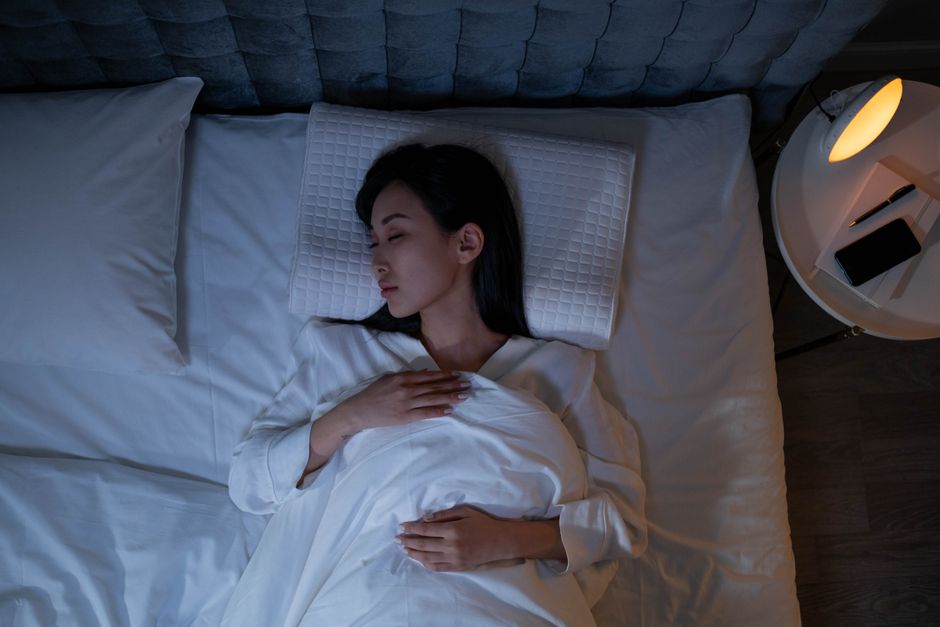
The core finding from decades of sleep science is stubbornly consistent: the 90 minutes before bed are more important than almost any other behavioral variable. The brain needs a gradual drop in core body temperature, a dimming of blue-spectrum light, and a reduction in cognitive load to initiate the melatonin cascade that gates sleep onset. Breaking any one of those three conditions — a late workout at the Anschutz Sports Pavilion in Aurora, scrolling a bright phone in bed, or working through a problem from the office — delays sleep onset and compresses slow-wave sleep cycles.
Temperature management is where Denver residents have a genuine advantage. The city's dry climate means an open window at night typically drops bedroom temperature into the low 60s Fahrenheit by 10 p.m. in summer, which is close to the 65-68°F range researchers at the National Sleep Foundation identify as optimal. The mistake most people make is exercising too close to bedtime, which raises core temperature for up to four hours afterward. Running the Cherry Creek Trail after 7 p.m. is fine on its own; pairing it with a midnight bedtime is not.
Light is the other lever. The Neuroscience Research Institute at the University of Colorado Anschutz Medical Campus has published work on circadian entrainment showing that even 10 minutes of bright overhead light between 9 and 10 p.m. can delay melatonin onset by 30 to 45 minutes. Switching to lamps rather than overhead lighting after 8:30 p.m. — a change that costs nothing — is one of the highest-return interventions available.
Several local businesses have built offerings explicitly around pre-sleep recovery. Altus Sports Institute in the RiNo neighborhood runs post-workout recovery protocols that include contrast hydrotherapy — alternating warm and cold water immersion — which research published in the European Journal of Applied Physiology associates with faster core temperature normalization and improved sleep quality. Sessions run $45 to $85 depending on duration. The Denver Athletic Club on Broadway offers a restorative yoga class on Tuesday and Thursday evenings that ends at 8:30 p.m. — specifically timed, according to the club's programming calendar, to avoid late-night cortisol spikes.
For residents who want to tackle the altitude variable directly, the University of Colorado Hospital's sleep medicine clinic at the Anschutz Medical Campus on East 17th Avenue in Aurora offers full polysomnography studies starting at around $1,200 before insurance. The clinic's pulmonary team can assess whether supplemental nocturnal oxygen — increasingly common among high-altitude athletes — is appropriate.
The practical starting point for most people is simpler: dim the lights at 8:30 p.m., skip the post-9 p.m. workout, and keep the bedroom window cracked. Do that for two weeks before buying anything else. Denver's elevation makes good sleep harder to earn, but the fix usually starts with habits, not gadgets.
About this article
Published by The Daily Denver
Spread the word
Daily brief
Free, in your inbox before 7am. Weekdays.
The Daily Network — local news across Australia